

When Can You Ride Horses on Portuguese Beaches? Season and Rules Explained
7 min read
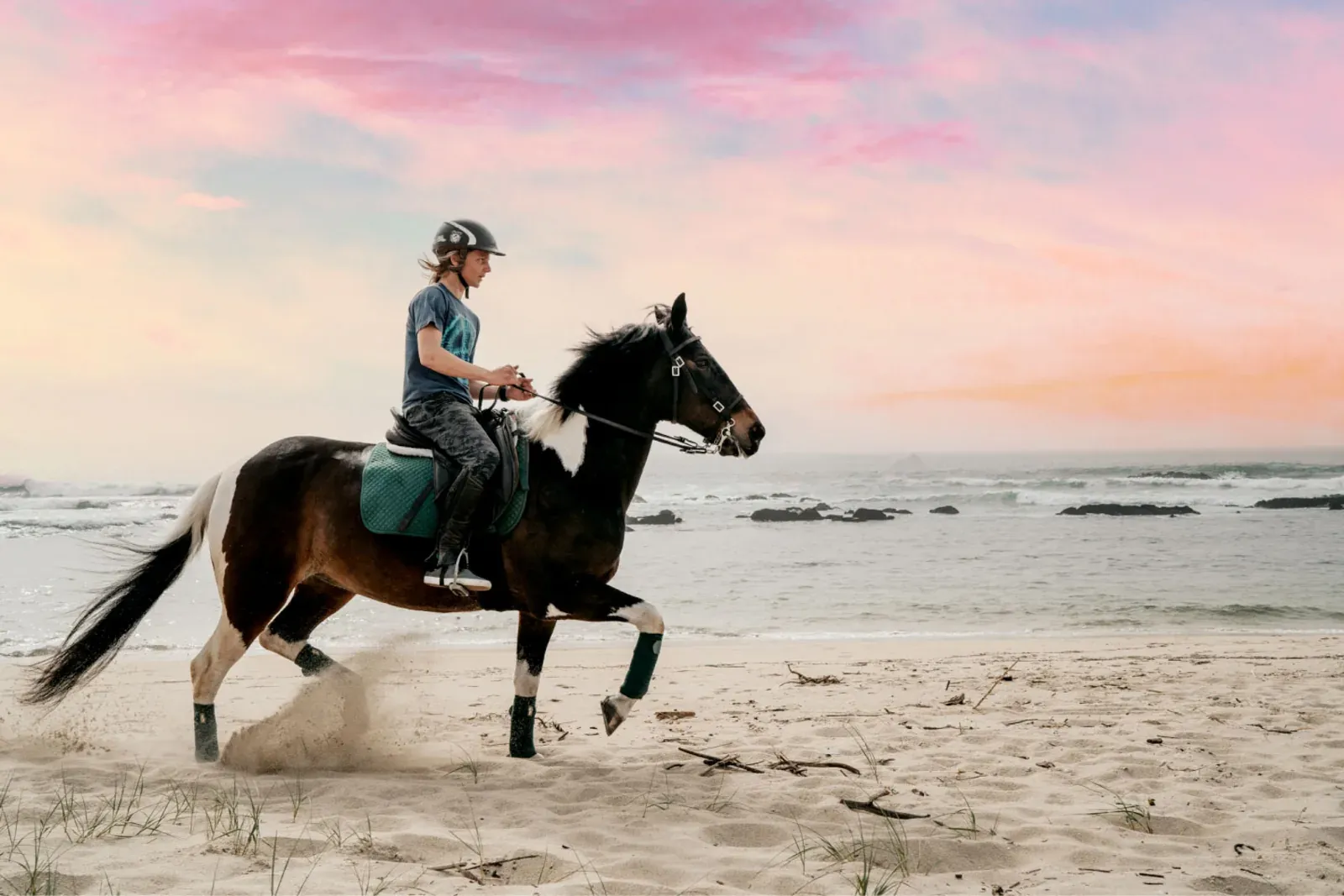
If you have ever scrolled past a photo of riders cantering through the surf and wondered, “Hang on — is that actually allowed in Portugal?”, you are asking exactly the right question. The short answer is yes, beach riding is very much a real thing here. The longer answer involves a seasonal rhythm that every local rider knows by heart, and that most visitors have never heard of: the Portuguese bathing season.
We are VIANAEQUESTRE, a riding association based in Areosa, on the edge of Viana do Castelo in Portugal’s green north. Since 2009 we have been taking small groups — never more than eight riders — onto the Atlantic sands, and the question of “when and where can we ride on the beach?” is one we answer almost daily, usually over WhatsApp before someone books their trip.
One honest note before we dive in: beach rules in Portugal can differ from one municipality to the next, and they are reviewed regularly. We are riders, not lawyers, so treat this as a practical guide from people who live it — and always confirm the details with us for your specific dates. That is what our WhatsApp (+351 934 142 212) is for.
The bathing season: roughly June to September
Portugal’s official bathing season generally runs from around mid-June to mid-September, though the exact dates shift slightly each year and each beach. During those months, supervised beaches — the ones with lifeguards, flags and rented sunbeds — are, quite reasonably, reserved for swimmers and sunbathers. A crowded summer beach is no place for half a tonne of horse, and we would not want to take one there anyway.
So during the bathing season, the practical picture looks like this:
- Supervised, lifeguarded beaches: animals are generally restricted during lifeguard hours. These stretches are off the menu in high summer, and rightly so.
- Unsupervised and wild beaches: outside the managed zones there is usually far more freedom — and this is exactly where our summer routes run.
- Early mornings and late evenings: even near busier areas, the hours before and after lifeguard duty are traditionally more relaxed. A ride at seven in the morning, on an empty beach at low tide, is a completely different world — and, frankly, the light is better too.
You will notice we keep saying “generally” and “usually”. That is deliberate. Each town hall and maritime authority can set its own local rules, and they change. We check the local guidance every season and plan our routes accordingly — which brings us to the good news.
October to May: the beach belongs to the horses
Outside the bathing season, the coast transforms. With no lifeguard operations running, the beaches of northern Portugal are generally open to riders at any hour of the day — governed less by regulations and more by common sense: give way to anglers and walkers, stay off the dunes and their protected vegetation, and keep to the firm, wet sand near the waterline, which is kinder to the horses and to the beach itself.
Here is the secret most visitors miss: this “off season” is when the Minho coast is at its most cinematic. The Atlantic in November has real drama to it. A January morning in Areosa, with Monte de Santa Luzia rising behind the town and sea mist drifting over the water, feels like riding through a film set. And there is a practical bonus — an empty beach means total freedom with timings. No dawn alarm required, although sunrise here remains worth every lost minute of sleep.
If your trip falls between autumn and spring, honestly, you have chosen well. Our beach horse ride runs all year, and many of our favourite photographs come from these quieter months.
What about Praia do Cabedelo?
Cabedelo, across the river Lima from the city centre, is Viana do Castelo’s most famous beach — and in summer it is busy with surfers, kitesurfers and swimmers. That is why our regular routes head the other way: along the Areosa shoreline and north towards the lighthouse at Montedor, where the sands are longer, wilder and far quieter. If there is a particular beach on your wish list, just ask — we will tell you straight what is feasible and when.
How we plan routes around the calendar
Our stables sit on Rua da Condominha in Areosa, only minutes from the sea, which gives us something precious: options. Whatever the season, tide or weather, there is always a beautiful route available.
In practice, a year with us looks like this:
- June to September: beach rides in the early morning or at the end of the day, on unsupervised stretches of sand. Summer’s headline act is the sunset beach ride — the hour when the crowds drift home and the sky takes over.
- October to May: beach rides at almost any hour, tides permitting. We favour a falling or low tide, when the band of firm sand is at its widest and safest.
- All year round, when the ocean is in a mood: the mountains are right behind us. Our mountain trail ride in the Serra d’Arga climbs into granite landscapes and vinho verde country where garrano ponies — northern Portugal’s small, hardy native breed — still roam free.
One local quirk worth knowing: in August, Viana do Castelo hosts the Romaria d’Agonia, one of Portugal’s great traditional festivals. The town fills with processions, gigantones and music — magnificent to witness, but it does mean we plan ride times with extra care that week. If your dates coincide, we will let you know in advance.
The unwritten rules we always follow
Whatever the month, some principles never change. They are the reason horses remain welcome on this coastline:
- Small groups only — a maximum of eight riders, always with a guide who knows these beaches intimately.
- Generous distance from bathers — if people are in the water or on the sand, we keep well clear.
- Never on the dunes — dune vegetation is fragile and protected; we ride the packed sand by the water’s edge.
- We clean up after our horses on shared paths and access points.
- We check before every ride — tides, weather and any local notices, so you do not have to.
Book with us and all of this is handled before you arrive. Your only job is to enjoy it.
Frequently asked questions
Is horse riding on the beach illegal in Portugal?
No — there is no blanket ban. What exists is a set of seasonal restrictions: supervised, lifeguarded beaches are generally off-limits to horses during the bathing season (roughly June to September) and within lifeguard hours. Outside that season, and on unsupervised or wild beaches, there is usually much more freedom. Because rules can vary locally, the safest approach is simply to check with us — we know the Viana do Castelo coast in detail and every route we offer is planned within what is permitted.
Can I still do a beach ride if I visit in July or August?
Absolutely — it just happens at the beautiful hours. In summer we ride early in the morning or towards sunset, on quiet unsupervised stretches north of the city. An August evening ride, with warm water around the horses’ hooves and the sky turning orange over the Atlantic, is one of the most requested experiences of our year. Groups are capped at eight, so summer dates fill quickly; prices are available on request via our contact page.
I have never ridden a horse. Is a beach ride realistic for me?
More realistic than you might think. Our horses are calm, sea-savvy and thoroughly used to first-timers, and your guide sets the pace around the least experienced rider — on a beach, even a relaxed walk feels unforgettable. If you would rather build confidence first, we also offer riding lessons at our centre in Areosa. Tell us your level on WhatsApp (+351 934 142 212) and we will shape the ride around you.